ART ARTIST
ARTICLES OPENING TALK, February 14 2026
PRELIMINARY REMARKS
Firstly, I want to thank the Percy Thomson Gallery and Stratford District Library for allowing this exhibition to happen and also to thank the Stratford Shakespeare Society and Stratford District Council for funding the casting and installation of the Shakespeare Bust in 1998 and to the TET for a substantial grant towards publishing William Shakespeare's Sonnet Philosophy in 2005.
Because this Exhibition ranges from 2024 back to 1972 there are many people who appear in various guises in the Exhibition wallpaper who I got to know as friends or even very close friends in the process. Some of those people are no longer with us.
So I mention specially Paul Beadle of Elam School of Fine Art, Pam Walker of the Taranaki Daily News, Bill Milbank of the Sarjeant Gallery, Dick Habershon of Stratford High School, David Loye from California, Joanna Margaret Paul from Whanganui, and particular mention of Karen O'Donnell who modelled for me for years and was a very close friend of Maree and myself.
One person who has been unable to attend today is Juliet Larkin once of the Daily News who has been unwell over the last few months. Our thoughts are with you and your family Juliet.
Lastly but not leastly, I want to acknowledge the incredible Maree for her lifelong inspiration and support. I dedicated all our publications to her in recognition of her love and strength over the last 50 or so years.
OPENING ADDRESS
The Back Cover of the Catalogue for Songs of the Earth 1972-2021 from Pihama South Taranaki shows a 2016 sketch that prefigures this Exhibition. Many of the elements in the sketch are now on display across the Percy Thomson Gallery and Stratford District Library with the Shakespeare Bust in Prospero Place as the pivot point.
However, it is the somewhat tangential story behind the ten other portrait busts and figures in the Exhibition that underpins all the artistic and philosophic explorations.
The bust and figure story begins in 1971 when I was initially refused admission to Elam School of Fine Arts in Auckland for not completing the third year at the School of Architecture before applying.
Only when I insisted on showing the Dean of Elam Paul Beadle a small carving of a head did he contact the Registry to permit entry. So, fortuitously, a portrait bust that swayed the Elam Dean gave me my first life-changing break.
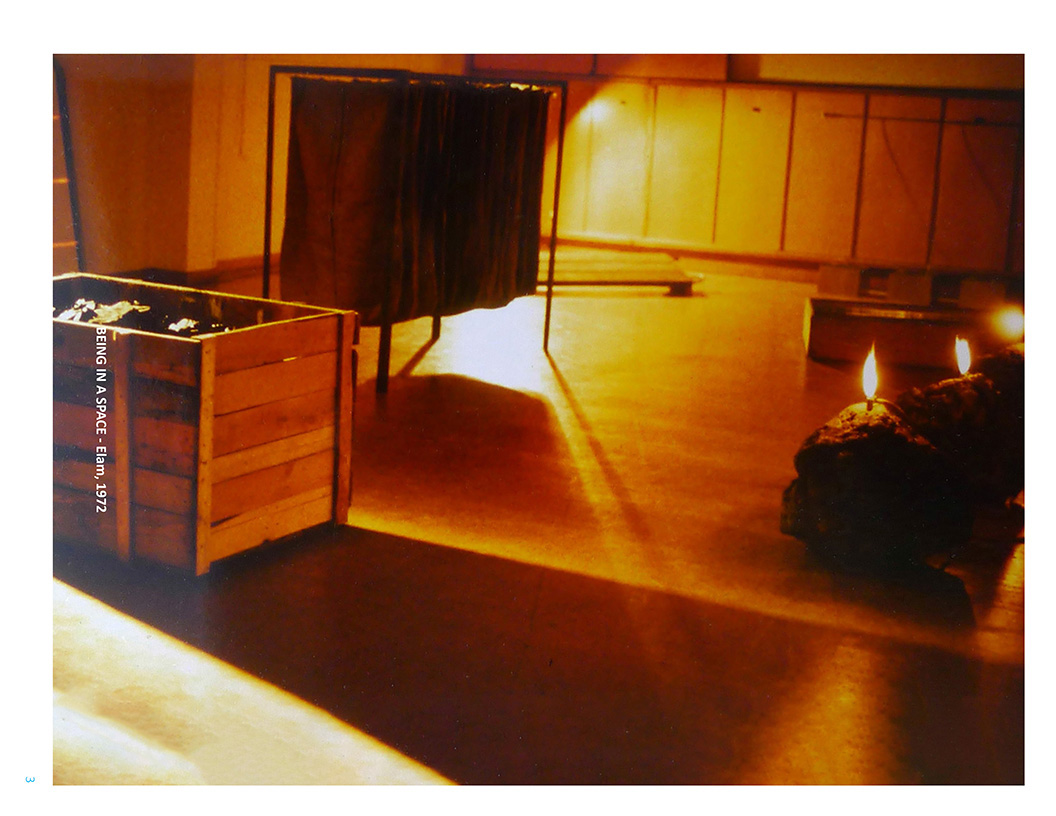
However, by my Second year, instead of portrait busts, I made heat and light works that won a national award judged by Colin McCahon and presented, somewhat ironically, by Paul Beadle (see the 1972 Press Clipping).
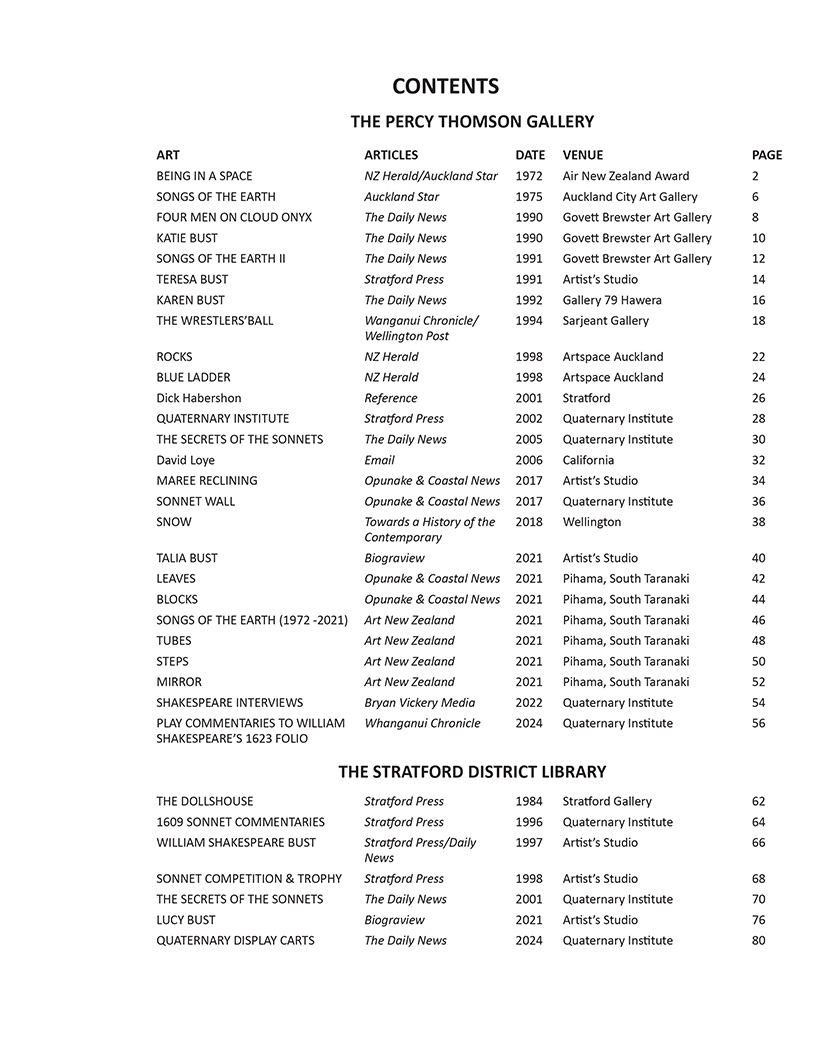
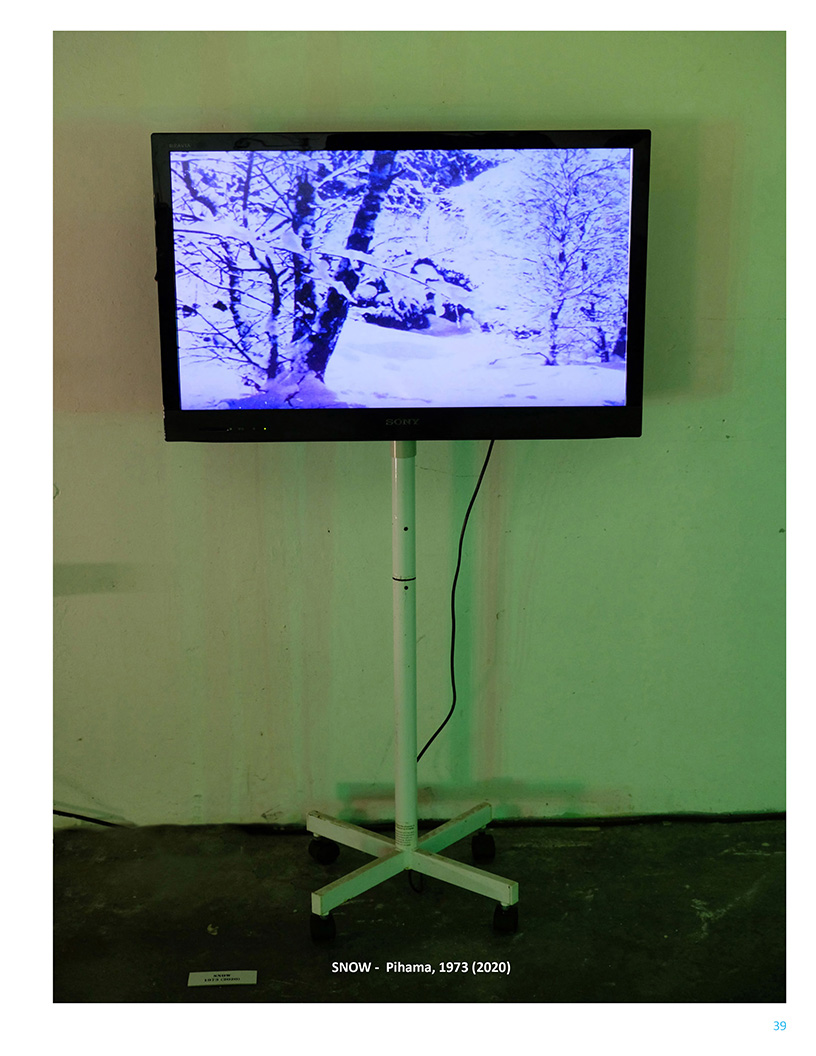
Hence, seven of the twenty-eight heat and light works from the 1970s and from 2017 onwards, exhibited at Pihama in 2021, form part of this Exhibition plus the large photos of earlier Installations and Paul Wedelski's video from 2021.
Only in the late 1980s, after moving to South Taranaki with Maree and a young family, did I return to making portrait busts and figures and exhibiting them in the early 1990s.
When, in 1993, I applied to do a Dome Show at the Sarjeant Gallery in Whanganui, the Director Bill Milbank checked out my exhibition with the Karen Bust and Figures at Gallery 79 in Hawera. Then, on his way to the Govett Brewster, he called by home before agreeing to the Dome proposal.
The complete surprise is that the exhibition of busts and figures in the early 1990s led in Whanganui by 1995 to the next life-changing insight that Shakespeare published his 1609 Sonnets to present the philosophy behind the 1623 Folio of his thirty-six plays – and his four longer poems.
This came about because, during the 1994 Dome Show, called The Wrestler's Ball, I met well-known artist and poet Joanna Margaret Paul, who held readings of Shakespeare's plays every month at her home in Whanganui.
A friend Peter Scannell was also attending the play readings and my interest was piqued when he handed me Ted Hughes' book, Shakespeare and the Goddess of Complete Being, which he had some difficulty understanding.
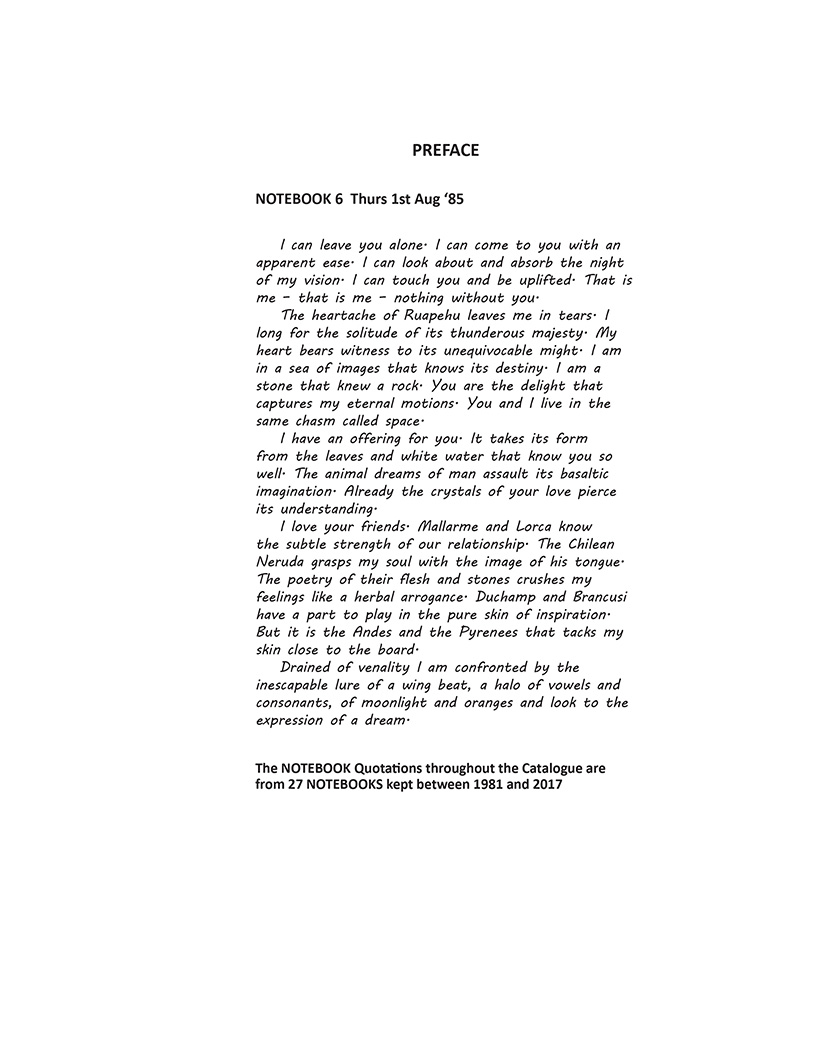
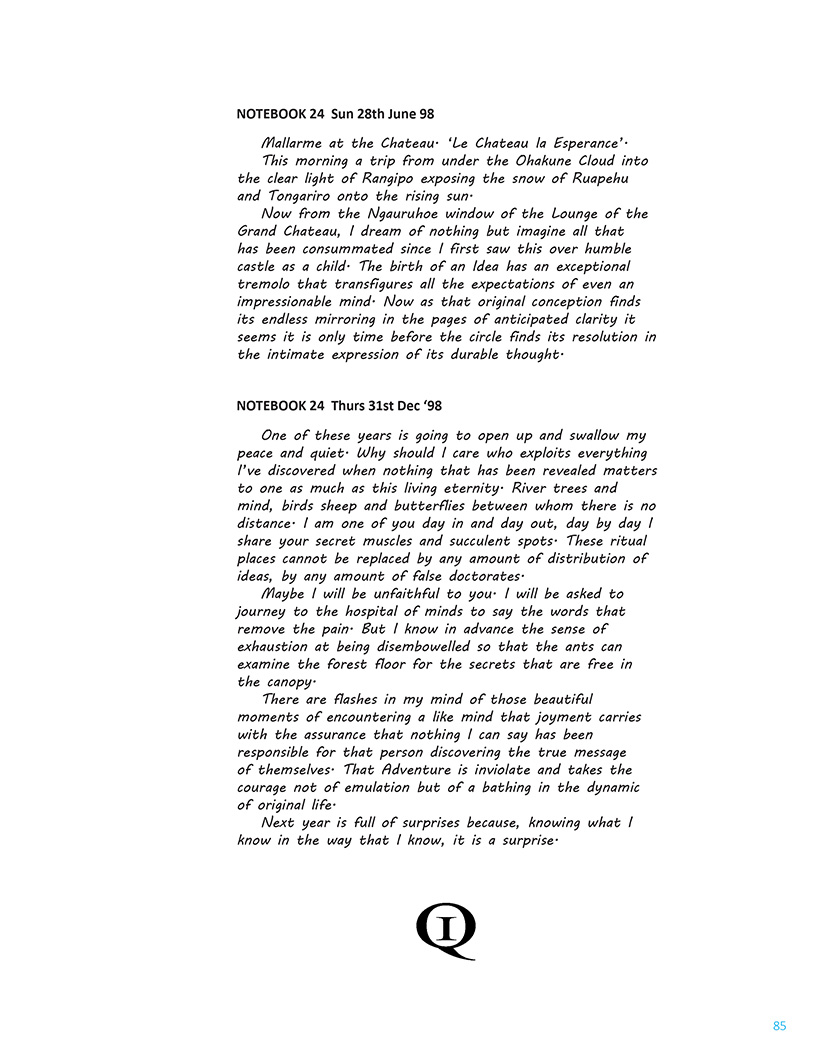
However, a quick scan alerted me to a mythic dimension in Shakespeare resonating with my years of research into the art, poetry, and philosophy of Duchamp, Mallarme and Wittgenstein – plus the science of Darwin. Notebooks I kept from 1981 to the 2000s record the moment in 1986 when I had an epiphany into the first three deeply philosophic minds (see page 5 of the Art Artist Articles Catalogue).
By March 1995, Joanna decided to read Shakespeare's 154 sonnets over a weekend, and by Sunday afternoon I realised they contained the most consistent and comprehensive nature-based philosophy ever devised.
So, the third aspect of the Exhibition, as prefigured in the 2016 sketch, displays the books and material generated over the last thirty years exploring and annotating every facet of Shakespeare's 154 sonnets, thirty-six plays and four poems with their inherent natural philosophy and its implications for human understanding and expression.
When, by the year 2000, I realised Shakespeare's deeply profound, comprehensive and globally significant nature-based philosophy was completely absent from Tertiary pedagogy internationally, I instituted the Quaternary.
In fact, many of the Tertiary academics I approached worldwide retreated disingenuously into their paper-thin international reputations defending corrupt versions of Shakespeare's original texts (see Dick Habershon's Reference – from someone free of Tertiary literary crimes).
After all, Tertiary pedagogy was founded as a level of study post-Secondary less than 1000 years ago in Paris and Bologna, and is now floundering well past its best-by date.
(As Darwin scholar David Loye discovered, Tertiary presses would not even publish his text-based revelations about the significance of 'love' in Darwin's Descent of Man, so he had to self-publish – see the Email from David Loye).
The Mirror hanging near the Exhibition entry captures the syndrome neatly. Tertiary's default paradigm has been to validate the mirror image (mind) as mythically real and the human (body) as unreal. In contrast, Shakespeare's sound philosophy captures the natural relation between the body and its mirrorical mind in extraordinary mythic depth.
Hence, Shakespeare's hold for 400 years on bewildered Tertiary minds. Yet, rather than admit being totally mystified they distract manically, grossly corrupting his works, denigrating his character, or crudely philandering his life-long love and respect for Anne Hathaway (as happens often in books, plays and films that have him lusting one or other woman – or boy – in an Epsteinish serial perversion of the profound Sonnet philosophy as licentious autobiography).
So, 25 years after instituting the Quaternary for peace of mind, I celebrate it here in Stratford on Patea afresh as a level of understanding and education that respects and explains fully every aspect of the original publications of all Shakespeare's profound sonnets, plays and poems and explores their encompassing global vision.
On a final note, returning to busts and figures, the Back Cover of the Art Artist Articles Catalogue heralds a new set of figurative work, and where that leads over the next few years will be a complete surprise.
A Challenge: I offer $10,000 to anyone who can prove Quaternary's nine published volumes are wrong to assert that William Shakespeare's Sonnet philosophy, which he publishes in1609, is the intentional philosophy behind the 1623 Folio of his thirty-six plays, and his four longer poems.
Roger Peters, Quaternary Institute
Maree Horner, Quaternary Imprint
|